
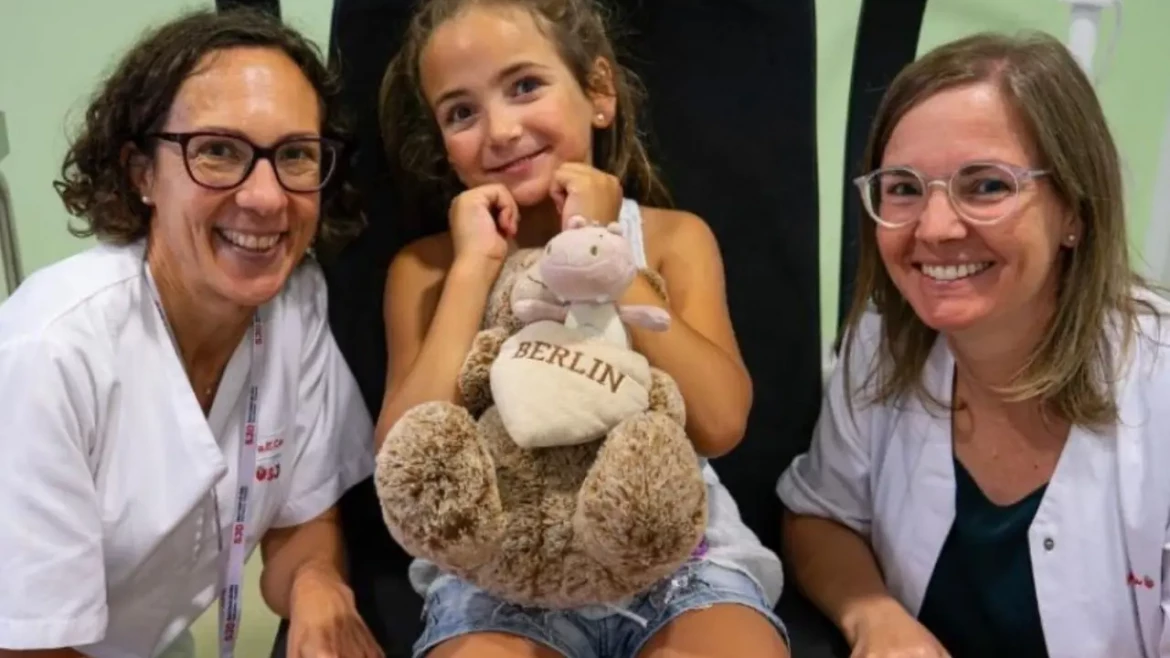
A pioneering ophthalmic surgery performed in Spain has enabled a young child to recover a significant part of her vision, once again highlighting the country’s strong position in advanced healthcare and medical tourism. The procedure was carried out at Hospital Sant Joan de Déu in Barcelona , a leading European center for pediatric and highly specialized medical care.
The patient, a six-year-old girl, was born with a rare condition known as corneal anesthesia, caused by underdevelopment of the trigeminal nerve. As a result, her eyes lacked sensitivity and protective reflexes, such as blinking, leaving them vulnerable to repeated injuries, corneal ulcers and progressive vision loss. Over time, the condition led to the loss of up to 90% of her visual capacity.
After conventional treatment options proved ineffective, the medical team opted for an innovative corneal neurotization technique, a highly specialized surgical procedure available only in a limited number of centers worldwide. The surgery involves transplanting a segment of a peripheral nerve and connecting it to a sensory facial nerve, allowing corneal sensitivity to gradually recover. The intervention was performed in stages, starting with one eye.
Several months after the operation, doctors observed a clear improvement. With the support of specialized scleral contact lenses, the child began to recognize objects and details in her environment. The frequency of ocular complications and emergency visits decreased significantly, and her overall quality of life improved. Specialists believe that further recovery may be possible over time.
This case illustrates why Spain has become an important destination for international patients seeking complex and innovative medical treatments. The combination of cutting-edge technology, multidisciplinary medical teams and experience with rare conditions enables Spanish hospitals to successfully treat patients from abroad, including children with highly complex diagnoses.
For international patients and families, Spain offers not only high medical standards, but also structured care pathways covering diagnosis, treatment and follow-up. Stories like this demonstrate how medical treatment abroad, when properly organized, can make a meaningful difference in patients’ lives and long-term outcomes.